Garden guide
Planning a small garden that stays useful from spring to fall
Most first gardens fail for a boring reason: the plan was made for one season instead of for the way the space is actually used. A bed that is easy to reach, planted in the right order and connected to a realistic watering routine will outperform a bigger, more ambitious garden almost every time. This guide walks through the decisions that matter before you buy anything.
1. Start with the walkway, not the plants
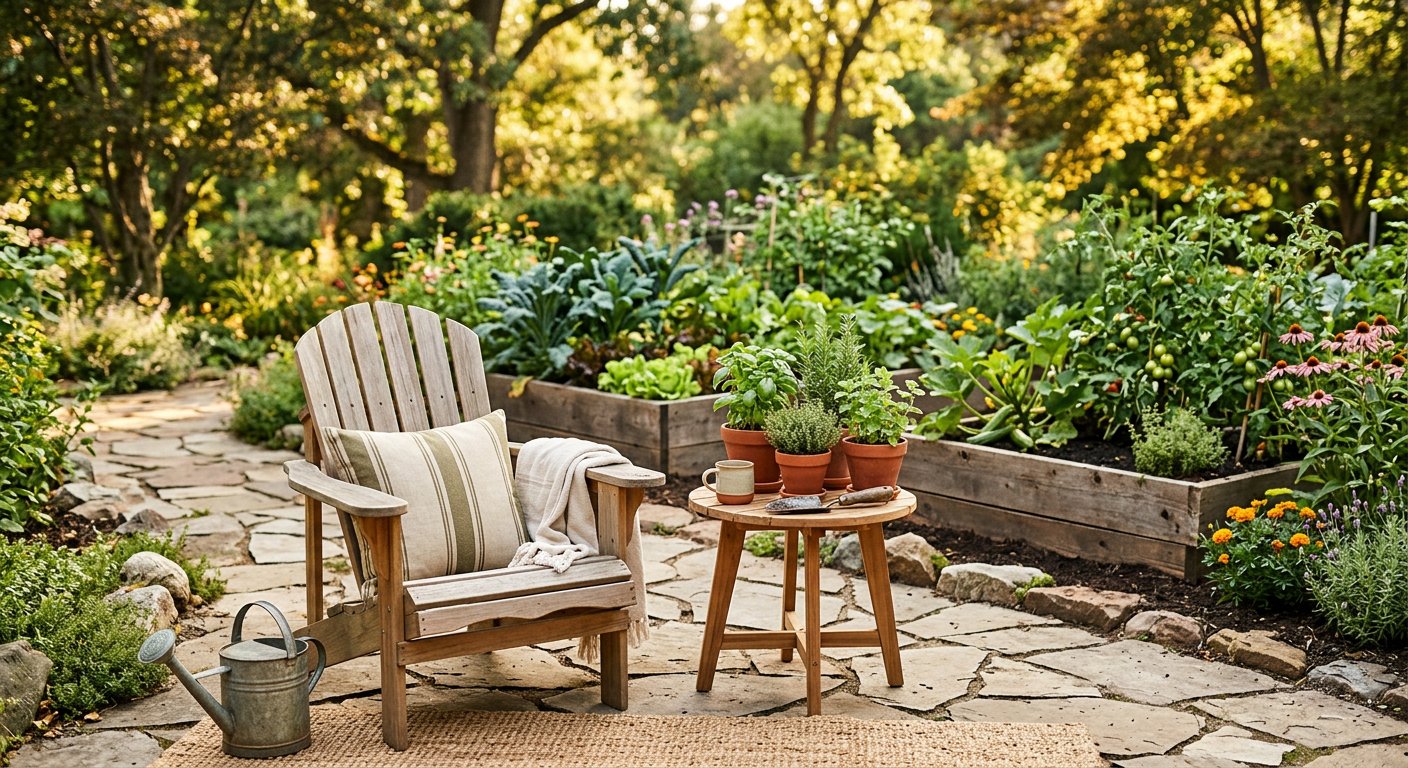
Measure the path you will take from the door to the bed with two buckets in your hands. If the route is narrower than about three feet or crosses wet lawn, you will skip watering on busy days. Placing beds along a stone or gravel path, and keeping the long side of each bed within arm's reach of that path, removes most of the daily friction of gardening.
2. Choose bed height around your back, not the catalog
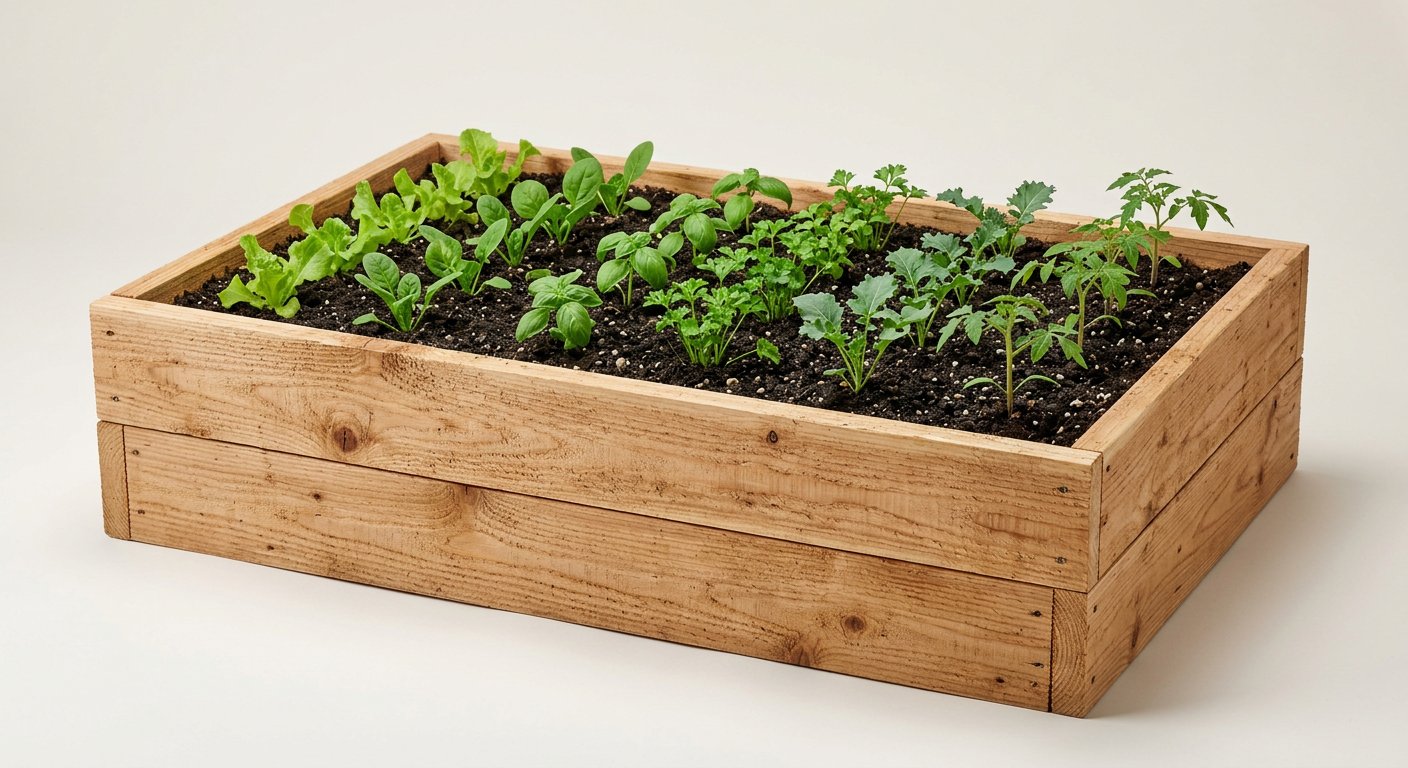
A bed that sits 11 inches off the ground works for most vegetables and is comfortable for anyone who can bend at the waist. If kneeling is uncomfortable, look for a bed at 24 to 30 inches, or set a shorter bed on legs. Taller beds hold less soil volume than they appear to, so check the fill estimate before you order — our 4 × 2 ft cedar bed takes roughly eight cubic feet of soil mix.
3. Put the tall crops on the north side
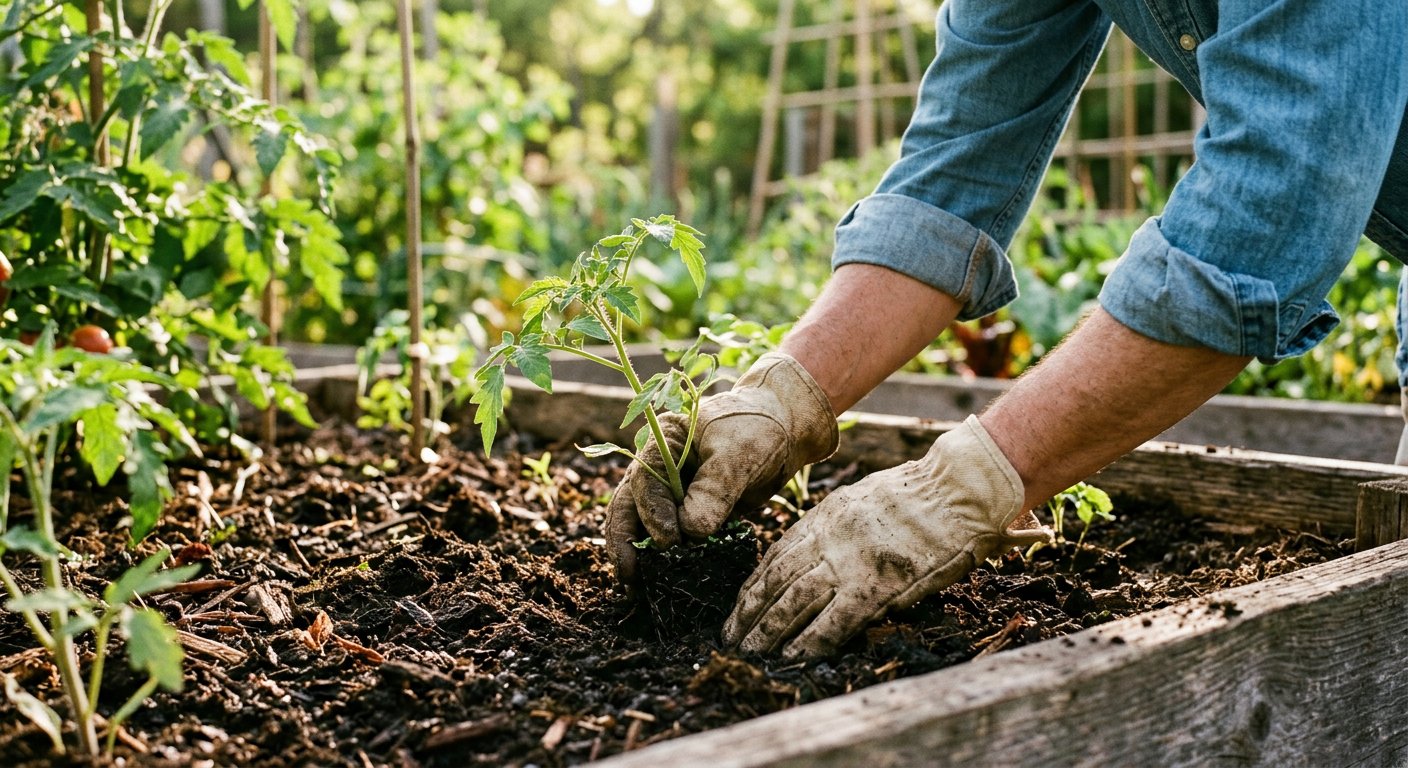
In the northern hemisphere, a bed oriented north to south with tomatoes, pole beans and trellised cucumbers at the northern edge keeps shade off the low growers. Salad greens, radishes and herbs stay on the southern edge, where they get the most light. This single layout rule often makes more difference than fertilizer.
4. Water in a routine you can repeat
Deep, less frequent watering encourages roots to grow down instead of spreading along the surface. A simple routine for a 4 × 2 ft bed in summer is two thorough soakings a week rather than a light sprinkle every evening. Check moisture by pushing a finger two inches into the soil; if it is dry at that depth, water. If it is still damp, wait a day.
"The best garden tool is the one you actually pick up. Everything else is decoration."
— GreenNest workshop notes, spring planning session
5. Plan for the gap between seasons
The two or three weeks when one crop finishes and the next has not filled in are where most gardens look tired. Keep a tray of fast growers — lettuce, arugula, cilantro — ready to transplant into any gap. Because these crops finish in 30 to 45 days, they keep the bed productive while slower plants catch up.
6. Store tools where the weather cannot reach them
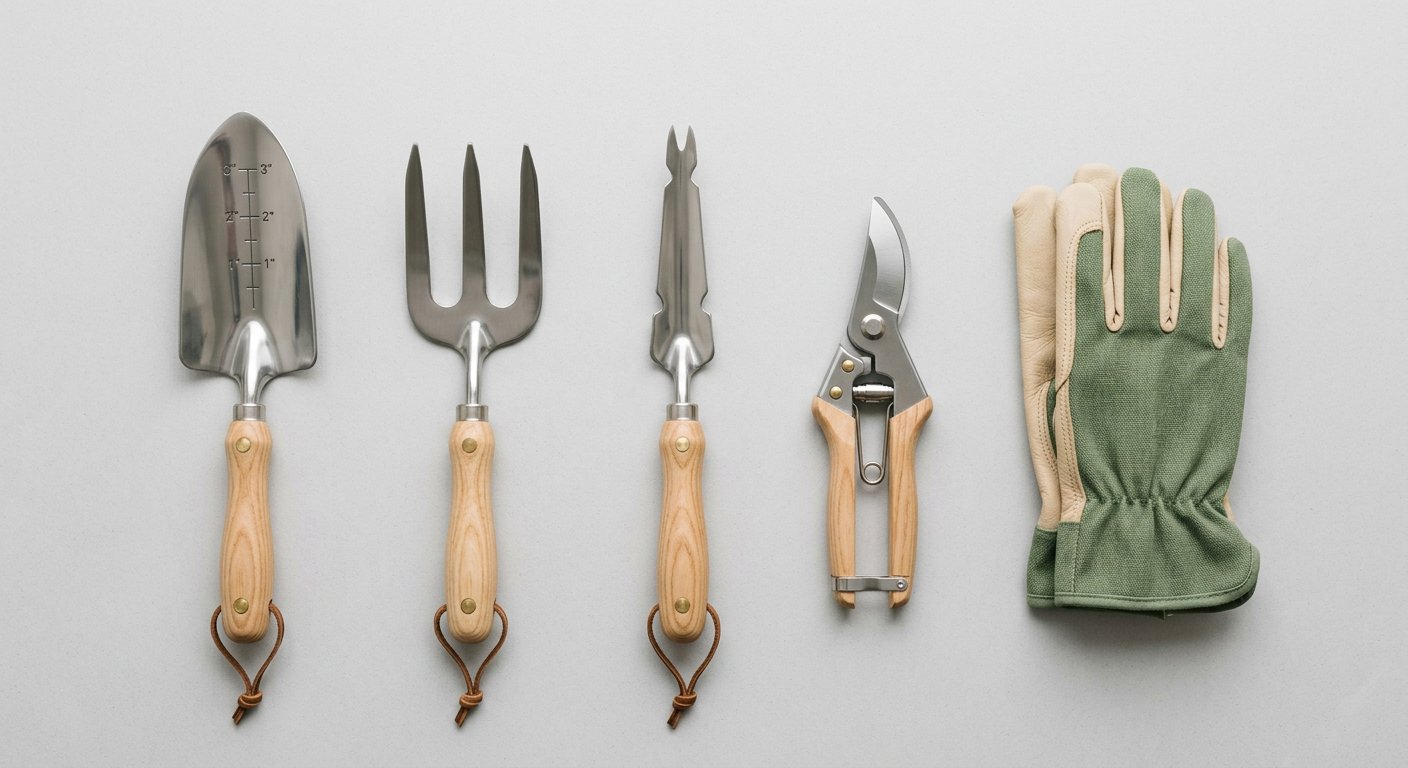
Stainless steel still spots if it sits wet, and wooden handles dry out and split when left in sun. Wipe heads dry before storing, hang long-handled tools off the floor, and keep small hand tools in a canvas roll. Ten seconds of care at the end of the day is the difference between a tool set that lasts two seasons and one that lasts ten.
What to buy first
If you are starting from nothing, buy in this order: one raised bed, one hand trowel, one pair of pruners, a watering can and a bag of compost. That covers roughly 80 percent of what a small vegetable garden needs in the first year. Furniture and lighting can wait until the garden is working — and honestly, they are nicer to choose once you know where you like to sit.
Questions about your space?
Send us your bed dimensions and which direction the space faces. We will suggest a crop layout you can follow in your first season — no charge, no obligation to buy.
Ask a gardening question